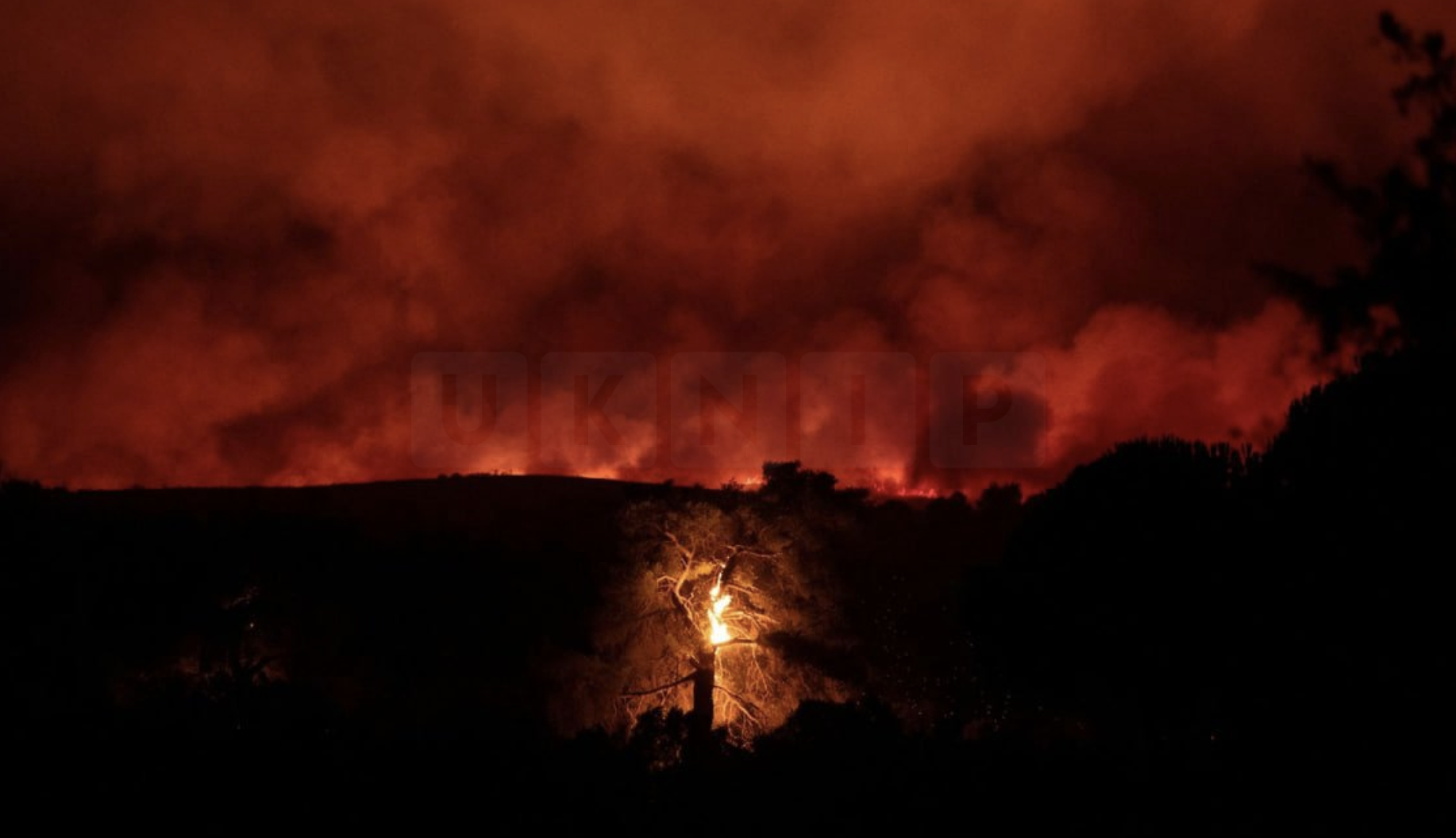
Greece is facing one of its most challenging wildfire seasons in recent memory as authorities ordered thousands of people to evacuate due to rapidly spreading wildfires near Athens and other regions. Experts warn that more extreme weather is expected in the coming days, further exacerbating the crisis.
On Sunday night, firefighters battled a “dangerous” fire near Athens, with smoke covering parts of the capital in a thick, dark haze. The emergency services issued evacuation orders in several towns, including the historic site of Marathon, as flames threatened residential areas.
Prime Minister Kyriakos Mitsotakis cut short his holiday and returned to Athens to address the growing crisis. By Sunday afternoon, firefighters had managed to control 33 out of the 40 blazes that had erupted in the previous 24 hours, according to fire brigade spokesman Vassilis Vathrakogiannis. However, seven fires continued to burn in the intense Mediterranean summer heat.
The situation was particularly dire in the East Attica region, where a blaze in the Varnavas area spread through a pine forest, creating towering flames and prompting the evacuation of hundreds of residents from nearby villages. Some villagers initially ignored evacuation orders, requiring rescue by fire service personnel.
The situation remains dangerous, especially with fires raging in areas with houses,” Vathrakogiannis said. The strong winds spread the fire rapidly, creating new fronts behind the containment lines.
A force of more than 400 firefighters, supported by 110 vehicles and 29 firefighting aircraft and helicopters, was deployed to battle the flames. In some cases, the flames reached more than 25 meters high, making firefighting efforts even more challenging.
In Metohi, a village that was not yet threatened, residents like Eugenia expressed fear for what the night might bring. Every year we have to escape from our houses,” she said, adding that she was checking on her cats as the fire loomed nearby.
In another village, Polydendri, Giorgos Tsevas, a local resident, was devastated by the destruction. “Everything is burning. I have 200 olive trees there, but now they are gone,” the 48-year-old said.
Elsewhere in the country, firefighters were partially containing a fire in Megara, West Attica, after it destroyed at least three houses and several cars. In Thessaloniki, a fire in the Lagadas area was also brought under partial control.
Greece is currently experiencing record temperatures, with forecasts predicting a peak of 39 degrees Celsius (102 degrees Fahrenheit) on Monday. Winds reaching up to 90 kilometers per hour have complicated firefighting efforts.
The Mediterranean country is highly vulnerable to summer wildfires, which have become a daily occurrence this season. After the warmest winter on record, Greece has experienced its hottest June and July since 1960.
Scientists warn that human-induced climate change is worsening the frequency and intensity of heatwaves globally, leading to longer wildfire seasons and increasing the area burned in these devastating fires.