The government has won the right to appeal a High Court ruling that would have forced asylum seekers to leave the Bell Hotel in Epping by mid-September.
The Court of Appeal overturned a decision that barred the Home Office from intervening in the case, ruling that the department has a “constitutional role relating to public safety” and is directly affected by the issues raised.
Judges’ Ruling
The judgment was handed down at the Royal Courts of Justice on Friday, 29 August, by Lord Justice Bean, Lady Justice Nicola Davies, and Lord Justice Cobb.
Lord Justice Bean stressed the scope of the appeal:
“We should say at the outset what this appeal is not about. It is not concerned with the merits of government policy in relation to the provision of accommodation for asylum seekers in hotels or otherwise.”
Background to the Case
Epping Forest District Council had sought a temporary injunction, claiming the hotel’s owners, Somani Hotels, breached planning rules by accommodating asylum seekers without permission.
The Bell Hotel has previously been used for migrant housing on several occasions, including from May 2020 to March 2021, October 2022 to April 2024, and again since April 2025.
The injunction had been due to take effect from 12 September, potentially displacing 138 men currently housed at the site.
Protests and Arrests
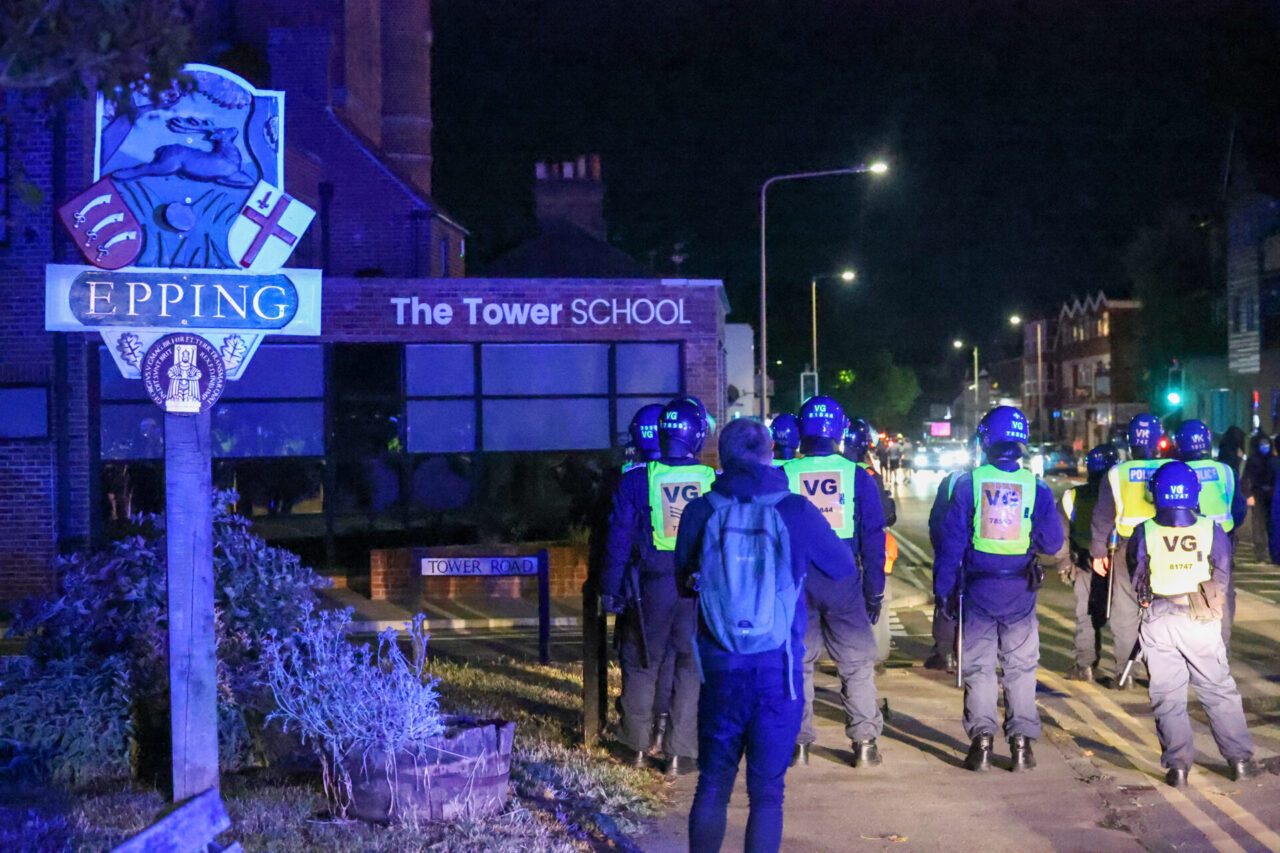
The case has drawn intense public attention after protests erupted outside the hotel earlier this month. Demonstrations escalated following the arrest of asylum seeker Hadush Gerberslasie Kebatu, 38, who has been charged with sexual assault offences and is currently on trial.
Another resident, Mohammed Sharwarq, a Syrian national, has been separately charged with seven offences. Several men have also been charged in connection with disorder at protests outside the hotel.
Government Response
Health Minister Stephen Kinnock told Sky News the appeal was not about keeping the Bell Hotel open indefinitely but about preventing chaos in the asylum system:
“It’s not a question of if we close the hotels, it’s a question of when and how we close the hotels. What we don’t want is a disorderly discharge from every hotel in the country, which could leave asylum seekers living destitute in the streets.
We are looking at a range of options – disused warehouses, offices, military barracks – but we need to manage this process carefully.”
What Happens Next?
The ruling allows the Home Office to formally challenge the injunction. Until the appeal is resolved, the 138 asylum seekers at the Bell Hotel remain in place, but their future accommodation remains uncertain.
Across the UK, around 32,000 asylum seekers are currently housed in 210 hotels.