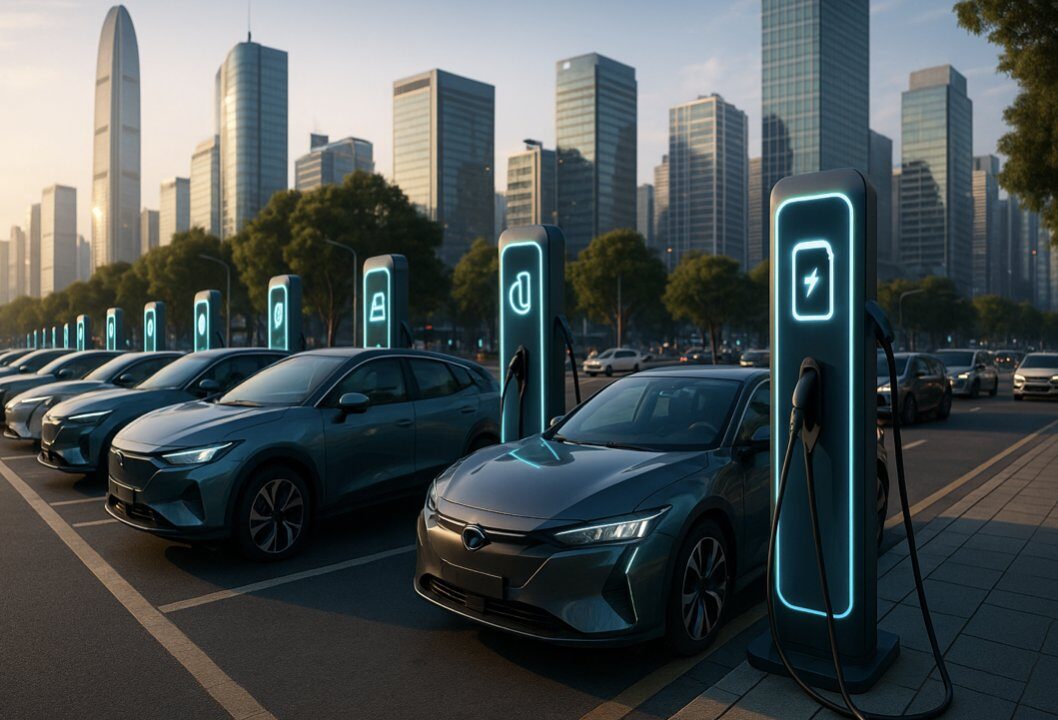
Something remarkable happens when you examine charging station deployment patterns. By the end of 2024, the US is expected to have 64,187 EV charging stations, but that number masks a critical imbalance. There were over 61,000 publicly accessible electric vehicle charging stations in the United States as of February 2024. Meanwhile, the electric vehicle (EV) market reached 1.56 million EV sales and a 10% sales share of all light-duty vehicles in 2024.
The math isn’t complicated – infrastructure struggles to keep pace with demand, creating a bottleneck similar to risk assessment on betting platforms like https:///bh.1xbet.com/en where odds calculations determine market positions.
Government Initiatives and Private Investment Acceleration
Federal funding mechanisms demonstrate unprecedented commitment to charging infrastructure. The Biden-Harris Administration has doubled the number of publicly available electric vehicle chargers since taking office, yet the challenge remains immense. show how policy frameworks drive private sector participation.
Key investment milestones across the infrastructure expansion:
- Tesla operates over 12,000 Superchargers in the US alone as the leading DC fast charging network
- National Renewable Energy Laboratory estimates that by 2030 there will be 33 million EVs on the road and 28 million EV charging ports will be needed
- More than 13,000 were added in the last three months alone according to Joint Office data
- ChargePoint maintains over 38,500 stations with nearly 70,000 individual charging ports
- FHWA received requests for consideration from 277 applicants requesting a combined $2.1 billion in funding
Smart Grid Integration and Load Management
Charging technology advancement creates complex grid management challenges. Fast-charging capabilities now reach 350 kilowatts, but power distribution systems need significant upgrades. Smart charging systems prevent grid overload during peak periods, managing electrical demand through algorithms that mirror strategic decision-making processes. Piezoelectric energy harvesting systems represent innovative approaches to sustainable charging infrastructure.
Network Reliability and Consumer Confidence
demonstrate how networks balance electrical demand. Load management becomes crucial when the US now has nearly 192,000 public Level 2 and DC fast charging ports. Time-based pricing encourages off-peak charging, reducing strain on electrical infrastructure while creating cost advantages for consumers.
Economic Impact and Market Projections
Infrastructure investment generates measurable economic benefits across multiple sectors. California leads with 14,040 public charging stations, making up 25.5% of the total number of charging stations in the U.S. Construction jobs related to charging station installation increased significantly in recent years. Manufacturing positions for charging equipment grew substantially as networks expanded. Service and maintenance roles expanded as networks require ongoing technical support.
Market analysis projects substantial growth ahead. 182,000 (~1%) DC Fast charging ports would be needed at public charging stations by 2030, primarily to support those with no access to consistent off-street parking. This represents billions in infrastructure investment opportunities across rural and urban markets.
Cost reduction trends make charging infrastructure increasingly attractive to investors. Equipment costs dropped significantly since 2020, while installation expenses decreased through standardized procedures. Revenue models now include subscription services, dynamic pricing, and renewable energy integration strategies.
Rural Infrastructure Challenges
Rural markets present unique infrastructure deployment challenges. Lower population density makes charging stations less economically viable in many regions. Addressing that issue has been a focus of recent legislation passed into law with targeted incentives for non-urban installations.
The transition from internal combustion engines requires coordinated planning across geographic regions. Urban areas need high-density charging networks, while highways require fast-charging corridors every 50-60 miles for long-distance travel confidence.
Future Technology and Market Dynamics
Battery technology improvements reduce charging frequency requirements while increasing charging speeds. New lithium-iron-phosphate batteries offer 400-mile ranges, decreasing charging anxiety among consumers. Solid-state batteries promise even greater capacity with faster charging capabilities.
Network reliability remains crucial for consumer confidence. With the continued investment from both private companies and the government, EV charging in the United States is much easier today than it was a few years ago. Predictive maintenance systems using artificial intelligence improve reliability while reducing operational costs across networks.
The correlation between infrastructure availability and adoption rates becomes clearer each quarter. Regions with robust charging infrastructure experience higher electric vehicle purchase rates. This pattern suggests that continued infrastructure investment will accelerate the transportation sector’s electrification timeline beyond current projections.
What emerges from examining these development patterns is that charging infrastructure functions as more than convenience – it serves as the foundation determining electric mobility’s adoption speed and ultimate success.