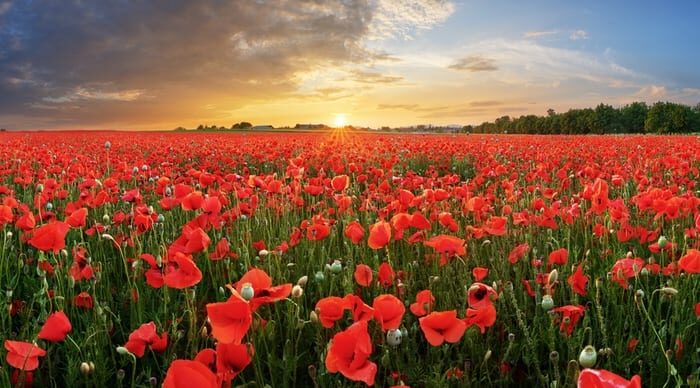
As November rolls in, it becomes a month of remembrance for all those who have lost their lives in conflicts spanning the globe throughout history. To symbolize our thoughts for those lost in these conflicts, many people choose to wear a small red poppy. These poppies are sold as part of the Poppy Appeal, which raises funds for the Royal British Legion—an organization dedicated to aiding those affected by conflicts and supporting servicemen and women whose lives were forever changed by the wars they fought in.
Why Do We Wear Poppies?
The tradition of wearing poppies dates back to World War One when these delicate flowers grew amidst the battlefields where soldiers made the ultimate sacrifice. However, the poppy truly gained popularity as a symbol of remembrance after the famous World War One poem, “In Flanders Fields,” was penned by John McCrae. Since then, the poppy has become a poignant symbol not only for remembering those who gave their lives in wars but also for honouring those who died in service to their country.
When Should You Wear a Poppy?
For those who choose to wear a poppy as a mark of remembrance, the Royal British Legion encourages wearing them during the Remembrance period, which begins on the last Friday of October and lasts until November 11. Additionally, the Legion suggests wearing poppies at the funerals of veterans and at commemorative events such as memorial services.
The Meaning of Different Colored Poppies
While the red poppy is the most widely recognized symbol of remembrance, there are various coloured poppies, each with its own unique meaning:
1. Purple Poppy: The purple poppy is worn to honour all the animals that have become victims of war. This includes horses, dogs, and pigeons that played crucial roles during World War One and other conflicts. Donations to the Purple Poppy Appeal, organized by the War Horse Memorial, support charities like World Horse Welfare and the animal charity Blue Cross.
2. Black Poppy: The black poppy serves as a commemoration of the contributions made by black, African, and Caribbean communities during times of war, both as service people and civilians. Launched in 2010 by Selena Carty, it signifies pride, honour, and glory, with the aim of inspiring future generations through these often overlooked historical legacies.
3. White Poppy: The white poppy is worn in remembrance of those who died in the later stages of a conflict. Some individuals choose to wear white poppies as they believe that the red poppy glorifies conflicts and wars. The poppies are distributed by the Charity Peace Pledge Union, which seeks to promote peace and reshape the world’s perspective on war.
In conclusion, the poppy remains a powerful symbol of remembrance, and the different coloured poppies offer individuals a way to pay tribute to various aspects of wartime sacrifice and contributions. As Remembrance Day approaches, these symbols help us honour and remember the diverse groups of individuals affected by conflicts throughout history.