Following two investigations conducted by the City of London Police’s Insurance Fraud Enforcement Department (IFED), Fraud Operations team, and Asset Recovery Team, a man from Surrey was sentenced to six years and nine months in prison for more than 30 counts of fraud.
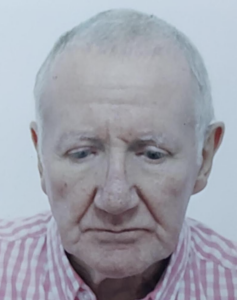
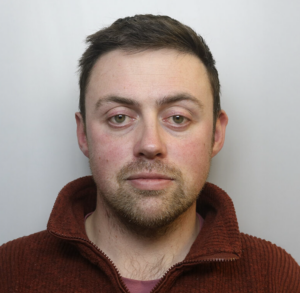
Rajesh Ghedia, 42, of Parkside, New Haw, Addlestone, defrauded multiple insurance and pension companies out of more than £1.3 million by falsely claiming to have stage 4 pancreatic cancer with less than a year to live. Ghedia also used his position at a well-known investment bank to persuade friends, family, and acquaintances to invest in non-existent financial products. The victims had actually transferred nearly £625,000 directly into his personal account.
On Friday, June 17, 2022, he was sentenced to a total of six years and nine months in prison at Southwark Crown Court.
Ghedia will now face confiscation proceedings. The City of London Police’s Asset Recovery Team (ART) will work to recover the funds obtained illegally.
Detective Constable Daniel Weller of the City of London Police’s IFED said:
“It is both disturbing and despicable that Ghedia took advantage of systems designed to help terminally ill patients, not to line the pockets of greedy fraudsters.” Ghedia appears to lack a moral compass. Hopefully, some time behind bars will allow him to find one.”
Detective Constable Simon Andrews of the City of London Police’s Fraud Operations Unit stated:
“Investment fraudsters frequently conceal themselves behind social media profiles or target complete strangers.” Ghedia was far more audacious, introducing himself to acquaintances as a senior trader at one of the world’s largest investment banks. Personal relationships were also no barrier to Ghedia’s crimes, as he even deceived his own relative for financial gain.
“Today’s outcome should provide some form of redress for the many people who have been impacted by this fraudster’s reckless actions.”
Insurance Deception
Throughout his career, Ghedia had enrolled in a number of pension plans that allowed him to withdraw funds if he was given less than a year to live. Ghedia also took out a life insurance policy with critical illness cover with an insurer in March 2017, which could be used in the same way if he was diagnosed with a terminal illness. This policy was worth £1.2 million.
Ghedia first contacted the pensions team for one of his plans in October 2020, informing them that he had been diagnosed with pancreatic cancer and had less than a year to live. Soon after, the company received a document allegedly from a doctor at a private clinic in London, confirming the diagnosis and stating that the cancer had spread aggressively.
Checks were made to ensure the medical professional’s legitimacy. Because the doctor was on the General Medical Council register, the pension provider made two payments totaling £14,581.32 to Ghedia.
Three months later, Ghedia contacted his insurer to make a claim on his life insurance policy. The insurer attempted to contact Ghedia but received no response for more than a month. Ghedia claimed that he was unavailable during this time because he had been admitted to the hospital.
Concerns were raised after a review of the medical reports presented by Ghedia. Ghedia stated over the phone that he was diagnosed in June 2020, but reports put the date at July 2019. The insurance company contacted the doctor listed on the report, who confirmed the diagnosis and provided additional documentation demonstrating that Ghedia was receiving cancer treatment on a weekly basis.
Because these documents demonstrated that Ghedia’s illness was genuine, the insurance company paid £1,201,096.97 into her account in May 2021.
Spring Finance reported a fraud to Action Fraud, the national fraud and cybercrime reporting centre, in the same month. The company stated that Ghedia had stopped making mortgage payments and that they were going to court. Spring Finance was informed of Ghedia’s diagnosis and given the medical reports that went with it. Spring Finance’s fraud investigator questioned the authenticity of the documents and contacted the care providers listed. A number of the care providers stated that the doctors named were not their consultants.
After receiving the Action Fraud report, IFED launched its investigation in June 2021. Initial investigations led them to the primary doctor listed on Ghedia’s medical reports. This doctor confirmed that he had never treated anyone named Rajesh Ghedia, nor had anyone with that name ever visited his clinic.
The doctor also demonstrated that Ghedia’s email addresses and signatures on documents were forgeries.
IFED officers served a warrant at Ghedia’s home and discovered a trove of evidence pointing to additional fraudulent claims.
Ghedia had claimed early on five additional pension plans due to his ‘illness,’ according to the investigation. The total value of these plans withdrawn was £69,335.36.
Ghedia also applied for two more life insurance policies in June and July 2021, according to inquiries. Ghedia provided reports stating that he was not undergoing any medical treatment and had not been diagnosed with any illnesses for both of these applications.
Ghedia did not respond to questions from IFED officers.
Spring Finance’s Compliance Manager, Erika Leung, stated:
“From the moment this case arrived on my desk, it was clear that Ghedia’s story did not add up.” The timeline of his diagnosis, combined with the lack of contact, payments, and suspicious medical documents, prompted us to report the case to Action Fraud. I’m glad we were able to help the police with their investigation, which resulted in Ghedia being held accountable for his crimes.”
Ghedia worked as a Program Lead in a bank’s Global Technology and Operations department, where he had no authority to offer financial advice or investment opportunities to existing or potential clients.
In May 2020, the bank was contacted by a man who was concerned that he was being defrauded by a bank employee named Ghedia. He explained that he had put nearly £135,000 into a portfolio that was invested in a cinema chain. Rajesh Ghedia, the Head of the Trading Desk, had set up the investment, which guaranteed a tax-free return. He’d been told that the portfolio had been taken over by another investment firm, but he couldn’t reach anyone at this firm, and Ghedia had stopped communicating with him.
The bank investigated the client’s account and discovered that it was a personal account rather than one linked to the bank. This prompted an investigation into Ghedia’s work computer, where his employer discovered the correspondence with the investor. Ghedia was suspended while the bank conducted an investigation.
The case was referred to the City of London Police’s Fraud Operations team, which discovered additional victims who had been duped into ‘investing’ by Ghedia.
Ghedia duped his victims by posing as the bank’s Head of the Trading Desk. He would then present the individual with a profitable investment opportunity and instruct them to transfer funds into one of the bank’s portfolios, which was actually one of his personal bank accounts. When an investor requested a withdrawal or questioned the lack of a return, Ghedia would offer a variety of excuses, including delays caused by the Covid-19 pandemic and the UK’s exit from the European Union. He even claimed that Russian hackers had intercepted the funds at one point and advised the client to report it to Action Fraud.
Ghedia’s regular taxi driver was one of his victims, whom he persuaded to invest over £35,000 in a portfolio with an investment bank. The ‘bank’ informed the taxi driver and his wife that they had violated regulations and were required to pay £72,531.90 in unpaid taxes. The couple borrowed the money from a friend on the condition that they would be paid back from their investment. Ghedia provided numerous excuses for the delay in disbursement, including a lie that he and his family were involved in a car accident while in the United States. Because the couple couldn’t reach Ghedia, they showed up at his house unannounced. Ghedia lied yet again, telling them that his daughter had died as a result of the crash’s injuries. The couple had no choice but to sell their home in order to repay the friend who had lent them the money for the tax bill.
Ghedia’s victim list extended beyond acquaintances, with the fraudster even defrauding one of his own family members. Ghedia approached a family member with an investment bank opportunity. After investing more than £63,000, the relative became suspicious when the returns did not materialise. Ghedia’s relative was informed by the investment bank that his investment did not exist after contacting the bank himself.
Ghedia’s assets were identified by Detective Constable Kirsty Watley of the force’s Asset Recovery Team (ART), including a £1.6 million property, which was placed under a Restraint Order under the Proceeds of Crime Act. The team also checked Ghedia’s bank account and discovered a £1.2 million payment from an insurance company. Suspecting fraud, the team acted quickly to seize the funds and alerted IFED of the potential insurance fraud.
Ghedia’s employment was terminated in June 2020 after he failed to appear for a disciplinary hearing at his workplace.
Ghedia was arrested in August 2020 by officers from the Fraud Operations team. When interviewed, he made no comment on any of the questions.