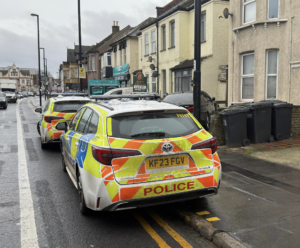
In a carefully coordinated operation, National Grid successfully transported two massive Super Grid Transformers from Shoreham Port in Brighton to the new substation in Little Horsted, Uckfield, on Sunday. This project, which aims to strengthen power reliability for UK Power Networks’ customers in Sussex, was completed on schedule with the help of a police-escorted convoy that navigated through 24 miles of roadways.
The convoy, departing at 8 a.m., made the slow journey to the substation in approximately eight hours, moving at a limited speed of 12 mph. The route took the specialist vehicles along the A27, A26, and several local roads, with diversions in place to mitigate traffic impact. Despite minor delays along the route, the operation concluded without major disruptions, thanks to extensive planning and cooperation from the public.
Complex Route and Traffic Management
Due to the size and weight of the transformers, the convoy had to bypass the A27 Patcham Viaduct, instead detouring onto the A23 to ensure safe passage. Sections of the A27 and A23 experienced temporary closures, with marked diversions directing traffic along alternative paths via the A270, Old Shoreham Road, and A293. Authorities had advised motorists to follow clearly marked diversion signs rather than SAT-NAV guidance during the operation.
Community Cooperation Key to Success
National Grid expressed gratitude to local residents and commuters who adjusted their travel plans and adhered to the road closures, allowing for a smooth and safe operation. Residents were particularly helpful by keeping designated roads clear of parked vehicles, ensuring the convoy’s safe passage.
With the transformers now in place at the Little Horsted substation, the project moves closer to providing enhanced power reliability across the region. National Grid extended its thanks to the community for its patience and understanding during this essential infrastructure upgrade.