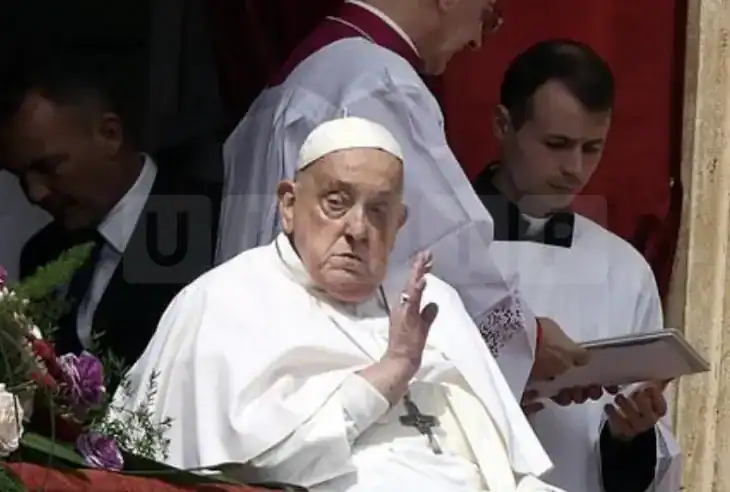
Pope Francis has died at the age of 88 after suffering a fatal stroke and heart failure, the Vatican confirmed today. The pontiff passed away peacefully in his residence at Saint Martha House in Vatican City at 7:35am, shortly after waking.
The Argentine-born Pope, who led the Catholic Church since 2013, had only recently been discharged from hospital following a long battle with pneumonia. His passing came just one day after he appeared in St Peter’s Square for Easter Sunday celebrations, offering a final public blessing to the faithful.
According to the Vatican, the Pope experienced a stroke followed by rapid cardiac failure early Monday morning. Doctors said he had woken with his alarm at 6am but fell gravely ill shortly after. He passed away despite immediate medical intervention.
In a statement, Dr. Andrea Arcangeli, Director of the Vatican’s Health and Hygiene Directorate, confirmed that Pope Francis had a complex medical history, including Type II diabetes, high blood pressure, bilateral pneumonia, and multiple bronchiectases. The Pope’s death was officially certified through electrocardiographic thanatography.
Final Testament Revealed
Just hours after his passing, the Vatican released Pope Francis’s final testament. In it, he asked for unity, peace, and fraternity among all people, and requested a simple burial “in the earth” within the Basilica di Santa Maria Maggiore in Rome, specifically between the Pauline and Sforza chapels.
His testament reads:
“I ask that my tomb be prepared in the burial niche in the side aisle between the Pauline Chapel and the Sforza Chapel of the Basilica… The tomb should be in the ground; simple, without particular ornamentation, bearing only the inscription: Franciscus.”
The Pope’s wish was also for the costs to be covered by a benefactor, previously arranged by him, and entrusted to Cardinal Rolandas Makrickas.
Global Mourning
The death of the pontiff has sparked mourning worldwide. Thousands of worshippers gathered in St Peter’s Square for a candlelit Rosary vigil Monday evening, led by Cardinal Mauro Gambetti. The solemn event, marked by silence and prayer, concluded with applause in tribute to the late Pope.
Tributes poured in from across the globe. King Charles said Pope Francis would be “remembered for his compassion and tireless commitment to the common good.” French President Emmanuel Macron praised his message of hope for the poor and his efforts to unite humanity and nature.
Prime Minister Giorgia Meloni of Italy, visibly moved, said: “I had the privilege of enjoying his friendship and counsel… We are saying goodbye to a great man and shepherd.”
In London, over a thousand mourners attended mass at Westminster Cathedral, while churches across the world began days of prayer and mourning.
Legacy of a Progressive Pontiff
Pope Francis, born Jorge Mario Bergoglio in Buenos Aires, Argentina, was the first Jesuit and first Latin American Pope. His tenure will be remembered for its progressive tone, deep concern for the poor, outspoken advocacy for refugees, and landmark stances on climate change and LGBTQ+ inclusivity.
Despite deteriorating health in recent years, Francis remained active until his final days. He insisted on greeting thousands of pilgrims on Easter Sunday, despite warnings from his doctors to rest.
What Happens Next
His body will lie in state at St Peter’s Basilica for three days starting Wednesday, allowing the public to pay their respects. His funeral is expected to draw global leaders and spiritual figures.
The College of Cardinals will convene within the next 15 days to begin the highly secretive conclave that will elect the 267th Pope. With more than 80% of the cardinal-electors appointed by Francis himself, his influence may continue through his successor.
Pope Francis’s death marks the end of a transformative era in modern Catholicism. As the Church prepares to choose its new leader, the world pauses to honour a man who redefined the papacy with humility, humanity, and hope.