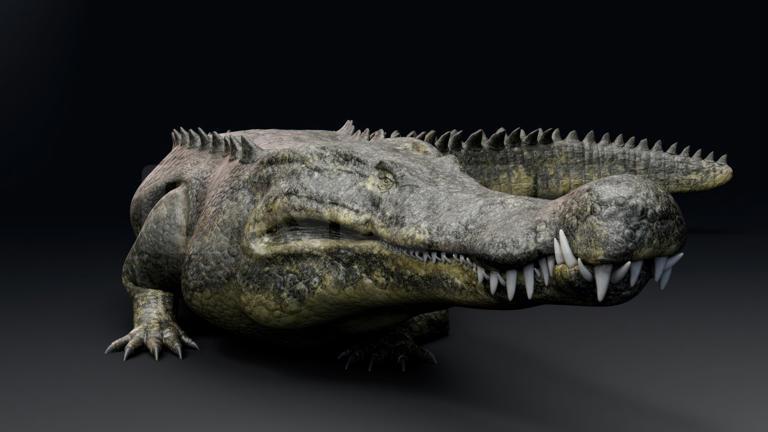
Scientists have discovered two previously unknown crocodile species off Mexico's Yucatán Peninsula — a groundbreaking find that rewrites what we know about one of the Americas' top predators.
A collaborative team from McGill University and Mexican research institutions has announced the identification of two distinct species of crocodiles living on Cozumel Island and Banco Chinchorro Atoll. Previously believed to be populations of the widespread American crocodile (Crocodylus acutus), genetic and anatomical analysis revealed %%UKNIP_ANCHOR_0%% them entirely new species.
"This discovery completely shocked us," said José Avila-Cervantes, lead author and %%UKNIP_ANCHOR_1%%. "It's the first study to deeply explore the genetic and morphological %%UKNIP_ANCHOR_2%% in these isolated crocodile populations."
The discovery was published in 2025 and involved extensive fieldwork and sampling in collaboration with El Colegio de la Frontera Sur and local expert Pierre Charruau. Genetic sequencing was conducted at McGill and funded by Canadian and Mexican %%UKNIP_ANCHOR_3%% agencies.
Critically Small Populations, Big Conservation Alarm
The two crocodile species, which are yet to be named, each have fewer than 1,000 breeding adults. Despite their remote habitats, rapid coastal development around the Yucatán Peninsula poses a serious threat, with habitat destruction reducing key nesting and feeding zones.
Professor Hans Larsson, who led the study, emphasized:
"Biodiversity is disappearing faster than we can document it. These crocodiles are at serious risk."
The IUCN Crocodile Specialist Group has voiced concern, %%UKNIP_ANCHOR_4%%.
Public Praise and Global Implications
%%UKNIP_ANCHOR_5%% of the discovery has sparked global interest. Wildlife advocates on X (formerly Twitter) praised the find, with one user saying, "This proves how much we still need to learn about nature," while another %%UKNIP_ANCHOR_6%% action in Mexico.
The discovery comes %%UKNIP_ANCHOR_7%% about biodiversity collapse worldwide. With many crocodilian %%UKNIP_ANCHOR_8%%, this adds urgency to region-specific efforts.
Researchers say their %%UKNIP_ANCHOR_9%% naming the new species, monitoring populations, and advocating for international protection.